

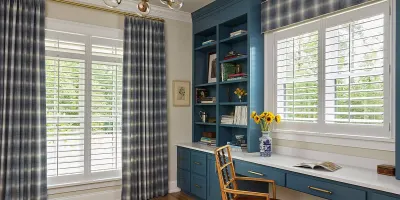
You notice it first in the afternoon light — a faint line across the hardwood where the sun lands at 2 p.m. every day, slightly lighter than the boards tucked safely beneath the sofa. A rug's border has bleached unevenly. The carpet near the sliding glass door looks tired compared to the rest of the room. At a mile high, the Front Range sunshine delivers more than warmth — it steadily, silently strips the color from your interiors.
Why Altitude Changes the Equation
At 5,280 feet, the atmosphere filters roughly 25% less UV radiation than it does at sea level. Combine that with 300-plus days of sun annually and generous windows designed to capture mountain views, and you have a formula for accelerated photodegradation inside your home. Ultraviolet light breaks down the chemical bonds in dyes, finishes, and synthetic polymers — the very materials that give flooring its color and structural integrity. What might take a decade at lower elevations can happen in half that time in the Denver area.
Window orientation matters more than most homeowners realize. South- and west-facing exposures receive the most intense, sustained sunlight throughout the year. Even north-facing rooms get enough reflected UV from surrounding buildings and the bright Colorado sky to cause measurable fading over time. This isn't a coastal-city problem with an easy fix — it's baked into living at altitude.
What's at Stake Beneath Your Feet
Hardwood is particularly vulnerable. The combination of UV exposure and the region's arid 30-to-40-percent indoor humidity stresses solid wood in two directions at once: the finish oxidizes and lightens while the boards themselves expand and contract through daily temperature swings. Engineered hardwood fares better structurally, but its wear layer still relies on factory finishes that degrade under relentless sun. Even a carefully chosen floor from the hardwood collection benefits from light management.
Carpet and luxury vinyl tell a similar story with different chemistry. Nylon and polyester carpet fibers lose tensile strength under UV, leading to matting and crush marks long before the color visibly shifts. Luxury vinyl plank, despite its durability, contains plasticizers and photolabile pigments that can yellow or chalk with prolonged exposure. A floor selected from the luxury vinyl lineup will last significantly longer when paired with thoughtful window coverings.
Window Treatments as Interior Insurance
The most effective strategy treats window coverings not as décor alone but as a mechanical barrier between the sun and your floors. Cellular shades with UV-blocking cores can cut solar transmission by up to 80% while still diffusing daylight into the room. Roller shades with reflective backing bounce heat back outward during summer, reducing both fading and cooling costs. Even sheer drapery, when layered over a UV-filtering liner, makes a measurable difference.
Roomscape Studios works with Hunter Douglas, Alta Window Fashions, and Carole Fabrics, brands that engineer their products specifically for high-exposure environments. During a design consultation, a project specialist can factor in your room orientation, existing flooring investment, and natural light preferences to recommend the right combination of opacity, fabric, and operating style. The full range is visible among the featured window treatment brands carried at the studio.
Motorized options add another layer of protection without requiring daily discipline. Programmable shades can close automatically during peak UV hours — roughly 10 a.m. to 3 p.m. along the Front Range — and reopen as the sun drops behind the foothills. You get the light you want, when you want it, without the damage you don't.
The relationship between window treatments and flooring is rarely discussed during renovation planning, yet it influences a floor's lifespan more than almost any other variable. Protecting a hardwood, carpet, or luxury vinyl investment starts at the window, not underfoot. To explore how the right coverings can preserve every surface in your home, schedule a project consultation at the studio.