

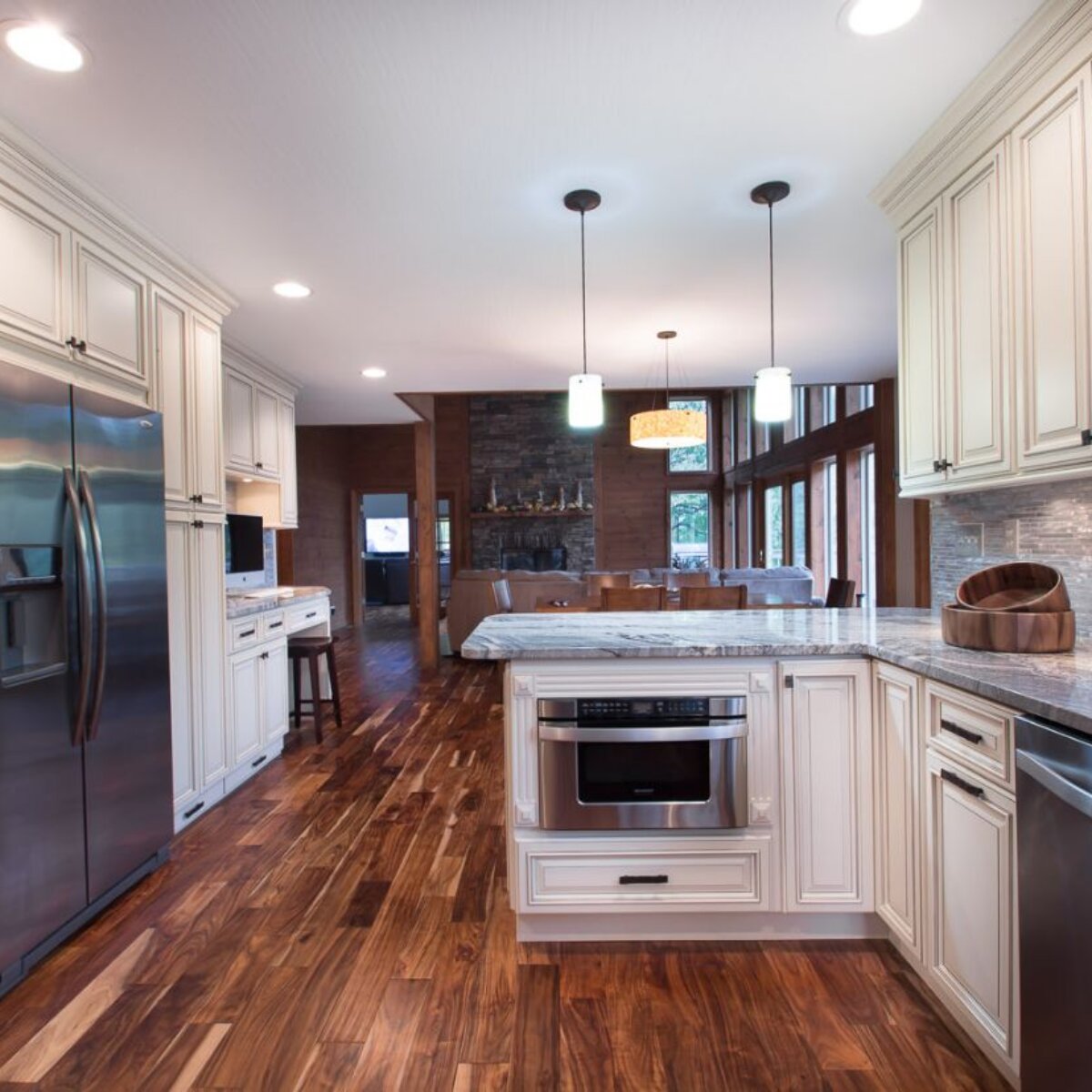
When homeowners start thinking about resale, flooring often moves from a background decision to a strategic one. Buyers notice it immediately because it affects how clean, current, and well-kept the entire house feels. In Denver, where dry air, tracked-in grit, and strong sun all shape how materials age, the best choice is rarely the trendiest one. It is the option that looks elevated, holds up well, and makes sense for the way the home lives.
Hardwood still signals long-term value
For many buyers, hardwood remains the clearest sign of lasting quality. It gives main living spaces a finished, architectural feel, and it photographs well, which matters when a listing needs to stand out online before anyone walks through the door. In resale terms, that combination of familiarity and visual warmth is hard to beat.
That said, not every plank performs the same way in Colorado conditions. Engineered constructions often make more sense than solid wood because they handle seasonal humidity swings with greater stability. If you are comparing species, widths, and finishes, a well-curated hardwood selection is more useful than chasing a generic trend. Buyers respond to floors that feel intentional, not merely expensive.
Luxury vinyl wins where practicality matters
Resale value is not only about prestige materials. It is also about removing objections. In mudrooms, basements, and homes with pets or active families, luxury vinyl can be a smart upgrade because it delivers a cleaner presentation with less maintenance anxiety for the next owner.
The strongest versions now offer better texture, more convincing visuals, and stronger wear performance than many people expect. For sellers in Arvada who want durable flooring without introducing a material that feels temporary, today’s luxury vinyl options can solve a real market problem. A buyer who sees durability at the front entry and in lower-level spaces is less likely to mentally discount the home.
Tile matters most in the rooms that influence objections
Kitchens, baths, laundry rooms, and entry areas carry disproportionate weight during showings. These are the places where dated flooring can make buyers assume bigger deferred-maintenance issues are waiting elsewhere. Well-chosen tile, by contrast, communicates durability and design discipline in the rooms where moisture and wear are constant concerns.
Large-format porcelain and stone-look surfaces tend to appeal to a broad audience because they feel clean, current, and easy to maintain. If you are weighing slip resistance, grout lines, or how a surface will read next to cabinetry, the guidance in tile flooring information helps narrow the decision in a practical way. In Boulder, where buyers often expect finishes to feel both modern and durable, that balance can be especially important.
The best resale strategy is consistency, not patchwork
One of the easiest ways to weaken perceived value is to overmix materials from room to room. Buyers may not be able to explain why a house feels disjointed, but they notice when transitions look abrupt or when one update does not relate to the next. A stronger approach is to create continuity across the spaces people see first, then use performance-driven materials where they make the most sense.
That is also where professional planning pays off. Flooring has to relate to wall color, natural light, and the fixed finishes that are not changing before the sale. Looking through recent project work can help clarify how different surfaces work together in real homes, while a broader view of flooring categories and brands makes comparison easier when you are trying to improve value without overinvesting. The goal is not to impress every buyer. It is to give the widest range of buyers fewer reasons to hesitate.
If you are deciding which update will have the strongest return, schedule a design consultation and start with a free project estimate.